

The minimalist movement has transitioned from a niche lifestyle choice into a mainstream cultural phenomenon. At the forefront of this shift is the tiny home movement. Promising financial freedom, a reduced environmental footprint, and a simpler way of life, the allure of downsizing is undeniable. However, trading a traditional suburban house for a dwelling that rarely exceeds 400 square feet is a profound transition.
Living small requires more than just throwing away old clothes and buying multi-functional furniture. It demands a complete overhaul of how you interact with your physical environment, your personal finances, and even your relationships. While the romanticized versions of tiny living seen on social media highlight pristine, sun-drenched lofts, the reality of daily life in a tiny home is a mix of intentional comfort and unique, ongoing challenges.
The Philosophy of Comfort in a Small Space
To downsize successfully, you must redefine what comfort means. In a standard-sized home, comfort is often equated with abundance: extra rooms, massive couches, and dedicated spaces for every conceivable activity. In a tiny home, comfort is redefined as efficiency, high-quality materials, and the elimination of physical clutter that causes mental friction.
Comfort in a tiny home is deliberate. It means investing in high-end insulation so the space remains quiet and temperature-controlled. It means designing a custom mattress for the loft because a good night’s sleep is non-negotiable. When every square inch is utilized, the items you choose to keep must serve a purpose or bring genuine joy. The result is an environment where you are surrounded only by things that matter, creating a surprisingly peaceful and comforting atmosphere.
The Architectural Magic of Layout and Design
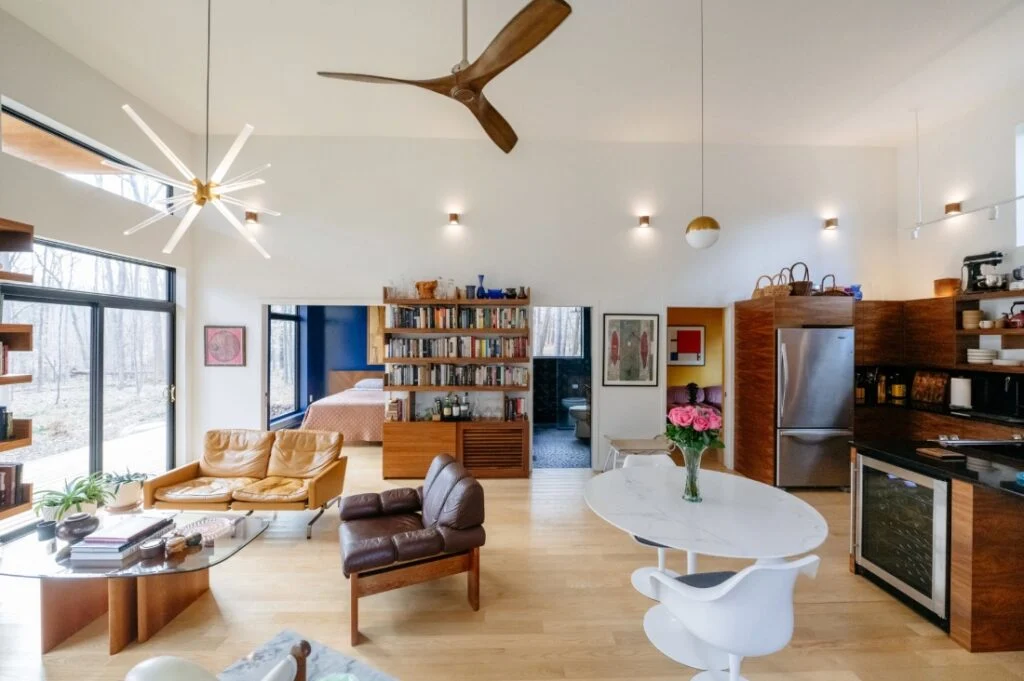
Living comfortably in a tiny home is entirely dependent on smart architectural design. Without clever spatial planning, a small house quickly begins to feel like a cramped box. Successful tiny homes rely on specific design principles to maximize the perception and utility of space.
Vertical Spatial Utilization
When floor space is limited, designers look upward. High ceilings are a staple of comfortable tiny homes because they prevent the walls from feeling like they are closing in. Vertical space is typically utilized for sleeping lofts, high-level shelving, and hanging storage for kitchenware or bicycles.
Multi-Functional Engineering
Every piece of furniture in a tiny home must earn its keep by performing multiple duties.
-
Staircases: Instead of ladders, comfortable tiny homes often use staircases where every step is a hidden drawer or cabinet.
-
Convertible Tables: Dining tables fold down from the wall or expand from coffee tables to seat guests.
-
Sofa Storage: Living room seating almost always features deep storage compartments beneath the cushions.
Strategic Lighting and Sightlines
Natural light is the most effective tool for making a small space feel expansive. Large, strategically placed windows allow the eye to travel past the physical walls and out into the surrounding landscape. Skylights in the loft area prevent the sleeping space from feeling claustrophobic, while light-colored interior walls reflect illumination to keep the entire home bright and airy.
The Financial Realities of Going Tiny
One of the primary drivers behind the tiny home movement is financial liberation. The economic benefits of downsizing are substantial, but they come with a unique set of financial nuances that prospective owners must understand.
Upfront Costs versus Long-Term Savings
Building or buying a high-quality tiny home requires a significant initial investment, often ranging from forty thousand to over one hundred thousand dollars depending on customization. However, compared to traditional real estate, the long-term overhead costs are drastically lower.
Property taxes are minimal or non-existent depending on how the home is classified, and monthly utility bills drop exponentially. Heating or cooling a 300-square-foot space requires a fraction of the energy needed for a standard house, allowing owners to reallocate their income toward savings, travel, or paying off debt.
The Hidden Financial Challenges
While daily living is inexpensive, financing and insuring a tiny home can be complicated. Traditional mortgages are rarely available for tiny houses, especially those on wheels. Buyers often must rely on personal loans, RV loans, or cash.
Additionally, finding comprehensive insurance coverage requires navigating specialized providers, as standard homeowners’ insurance policies typically do not cover structures built outside of traditional building codes.
Daily Rhythms and the Logistics of Less
The day-to-day mechanics of tiny living require a level of mindfulness that traditional homes do not demand. Routine tasks become deliberate actions, and habits must evolve to fit the scale of the environment.
The Kitchen Experience
Cooking in a tiny home can be remarkably efficient, but it eliminates the luxury of letting dishes pile up. Prep space is usually limited to a single large cutting board that fits over the sink. Premium tiny kitchens feature induction cooktops, convection microwave ovens, and apartment-sized refrigerators. While you can prepare gourmet meals, you must clean as you go to maintain sanity and counter space.
Laundry and Waste Management
Unless your tiny home is built on the larger end of the spectrum, a full-sized washer and dryer set is a luxury. Many inhabitants utilize compact, all-in-one washer-dryer combos that take longer to cycle but fit neatly under a counter.
Waste management also requires daily attention. Smaller trash cans mean frequent trips to outdoor bins, and those utilizing composting toilets must commit to a regular maintenance schedule to keep the system functioning without odors.
The Social and Psychological Dynamic
Downsizing alters your relationship with yourself and the people you live with. If you share a tiny home with a partner, the lifestyle will test and reshape your communication dynamics.
Navigating Shared Space
In a tiny home, privacy is a curated experience rather than a structural guarantee. There are no separate wings of the house to retreat to after an argument. Couples who thrive in tiny homes emphasize the importance of open communication, emotional maturity, and creating artificial boundaries, such as using noise-canceling headphones or scheduling separate time away from the house.
The Shift to Outdoor Living
To live comfortably in a tiny home, you must view the outdoors as an extension of your living room. Patios, decks, and outdoor kitchens are vital components of the lifestyle. When weather permits, daily activities naturally spill outside, preventing the interior of the home from feeling restrictive.
Zoning, Legality, and Placement
The greatest hurdle for tiny home enthusiasts is rarely the physical size of the house; it is finding a legal place to put it. Zoning laws and local building codes have struggled to keep pace with the tiny house movement.
Foundations versus Wheels
Tiny homes generally fall into two categories: those built on permanent foundations and those built on trailers (Tiny House on Wheels, or THOWs).
-
Permanent Foundations: These must comply with local accessory dwelling unit (ADU) laws or traditional building codes, which often dictate minimum square footage requirements that tiny homes do not meet.
-
Homes on Wheels: These are often classified as recreational vehicles (RVs). While this provides mobility, many municipalities prohibit living in an RV permanently on private property outside of designated RV parks.
Finding Your Spot
Progressive communities are beginning to adapt, creating tiny home villages and updating zoning laws to allow for alternative housing. Before committing to a build, prospective owners must rigorously research local ordinances, land-use laws, and utility hookup requirements to ensure they have a stable, legal place to park or construct their home.
Final Thoughts on the Downsized Life
Tiny home living is not a magical solution to all of life’s complexities, but it is a powerful tool for intentional living. It strips away the excess and forces you to focus on what truly matters to your personal well-being. For those willing to adapt to the physical limitations, master the spatial logistics, and navigate the legal landscape, downsizing offers a level of freedom, financial stability, and cozy comfort that traditional housing rarely matches.
Architectural Inspiration for Small Spaces
Frequently Asked Questions
How do tiny homes handle extreme weather conditions like severe winter cold or summer heat?
Tiny homes can handle extreme weather exceptionally well, provided they are built with high-quality insulation and proper ventilation systems. Many builders use spray foam insulation, which seals tightly and offers a high thermal resistance rating per inch. For climate control, mini-split heat pumps are standard because they provide both efficient heating and air conditioning in a single, compact wall-mounted unit. Proper vapor barriers and air exchange systems are also vital to prevent moisture buildup and condensation inside the small sealed environment.
What are the long-term resale values of tiny homes compared to traditional real estate?
Unlike traditional real estate, which generally appreciates over time because of the underlying land value, tiny homes on wheels typically depreciate similarly to vehicles or recreational vehicles. They experience wear and tear from movement and do not include land ownership. However, tiny homes built on permanent foundations that comply with local building codes can retain or increase their value, especially if they are located in high-demand urban or vacation areas where they serve as income-generating rental properties.
How does hosting guests or entertaining work when you live in a tiny house?
Entertaining in a tiny home requires creativity and reliance on outdoor spaces. Indoor hosting is usually limited to intimate gatherings of two to three guests, utilizing convertible seating and folding tables. For larger groups, tiny home owners utilize outdoor decks, patios, and fire pit areas to expand their hosting capacity. Some tiny home communities also offer shared common buildings with larger kitchens and dining areas for residents to host bigger events.
What kind of maintenance is unique to a tiny home on wheels?
Tiny homes on wheels require specific maintenance related to their mobility. Owners must regularly inspect the trailer chassis, brakes, and wheel bearings to ensure they are safe for travel. The constant vibration of moving a house down the highway can cause structural settling, requiring owners to periodically check plumbing connections, tight fasteners, and roof seals for hairline cracks. Tire maintenance and protecting the underside of the home from pests and moisture are also critical ongoing tasks.
How do utility connections work if you want to live completely off the grid?
Going off the grid in a tiny home requires specialized infrastructure. Power is typically generated through a roof-mounted solar panel array connected to a lithium-ion battery bank. For water, owners rely on rainwater collection systems or large freshwater holding tanks paired with a 12-volt pump. Waste is managed using composting or incinerating toilets, while graywater from sinks and showers is filtered through specialized filtration systems to be safely reused for landscaping, depending on local environmental regulations.
Is it difficult to get a mail delivery address or set up residency for a tiny home?
If the tiny home is built on a permanent foundation on private land, establishing a mailing address is identical to a standard home. For tiny homes on wheels parked on rural land or in transitional spaces, owners often use a post office box or a private mail-forwarding service to establish a legal address. Some states allow residents to use the address of a registered tiny home community or RV park as their permanent residence for tax and voting purposes.